The information on this website is general in nature and does not take into account your objectives, financial situation, or needs. Consider seeking personal advice from a licensed adviser before acting on any information.
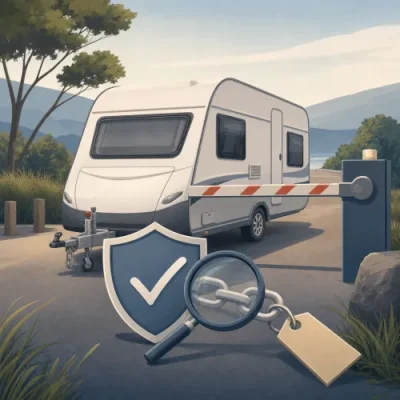
A PPSR caravan check can help you find out whether a used caravan may have finance owing or other recorded interests before you buy. This guide explains what to check, why encumbrances matter, and how settlement can be handled more safely.
Buying a used caravan can be a practical way to reduce the upfront cost of ownership, but it also brings extra checks that are easy to overlook. One of the most important is a PPSR caravan check, which can help identify whether a caravan may have finance owing or a registered security interest attached to it.
This matters because a caravan that is still used as security for someone else's loan may be encumbered. If the debt is not properly paid out and the security interest is not released, the buyer may face delays, disputes or, in serious cases, the risk of the secured party taking action against the asset.
This article explains how PPSR checks work in general terms, what finance owing can mean, and how buyers can approach purchase and settlement more carefully. It is general information only and does not replace legal, financial or lender-specific advice.
What is a PPSR caravan check?
The Personal Property Securities Register, commonly called the PPSR, is a national register used in Australia to record security interests in personal property. For caravan buyers, a PPSR search can help show whether a lender or another secured party has registered an interest against the caravan.
A PPSR search is commonly used when buying vehicles, trailers, caravans, boats and other valuable personal property. For caravans, the search usually depends on correctly identifying the caravan through details such as a VIN, chassis number or other serial identifier, depending on the caravan and how it is recorded.
A PPSR report may indicate things such as:
- whether a security interest is registered against the caravan;
- details of the secured party listed on the register;
- the date and time of the search;
- identifier details used for the search;
- where applicable, certain vehicle-related information such as stolen or written-off status.
The report is only as useful as the details entered. If the VIN or chassis number is wrong, incomplete or does not match the caravan, the result may not give you the protection or confidence you expected.
Why finance owing on a caravan matters
When a caravan has finance owing, it may mean the seller borrowed money to buy it and the lender registered a security interest over the caravan. This is common with secured caravan finance and is not automatically a problem, provided the loan is paid out correctly at settlement and the registered interest is removed or discharged.
The risk arises when a buyer pays the seller directly without confirming that the existing loan will be paid out. If the seller does not use the sale proceeds to clear the debt, the lender's security interest may remain on the caravan. That can create practical and legal problems for the new buyer.
Possible consequences include:
- difficulty proving the caravan is unencumbered when applying for finance or insurance;
- delays in settlement if your lender will not proceed until the existing interest is dealt with;
- disputes with the seller about who is responsible for paying out the loan;
- the risk of a secured party seeking to recover the caravan if the prior borrower defaults;
- reduced resale confidence if the PPSR record is not properly cleared.
For buyers using caravan finance, an existing encumbrance can also affect the settlement process. A lender may need clear evidence of payout arrangements before it agrees to advance funds against the caravan as security. Requirements vary between lenders and depend on the transaction.
How to do a PPSR caravan check before buying
A PPSR check should be done before you commit to settlement, especially for a private sale or a used caravan. It is also worth doing early enough that you have time to ask questions if the report shows a registered interest.
1. Confirm the caravan's identifying details
Ask the seller for the caravan's VIN, chassis number or other relevant identifier. Do not rely only on an advertisement or a text message. Compare the number against the caravan itself, registration papers if available, manufacturer plates and sale documents.
Be cautious if the number is hard to locate, appears altered, does not match the paperwork or the seller is unwilling to provide it. Identifier mismatches can make it harder to confirm the caravan you are buying is the same caravan searched.
2. Run the PPSR search before paying a deposit or settlement amount
Ideally, complete the search before you pay a meaningful deposit or transfer the purchase price. If you do pay a deposit before receiving the report, consider whether the agreement clearly explains what happens if the PPSR result reveals finance owing or another issue.
A search done too early may also become outdated by settlement. If there is a gap between your first inspection and final payment, it may be sensible to run a fresh search close to settlement so you are working from current information.
3. Check the report details carefully
When reviewing a PPSR report, look for more than a simple yes or no result. Check that the identifier on the report matches the caravan, that the report date is recent, and whether any security interest is listed.
If the report shows no security interest, keep a copy with your purchase records. If it shows a registered interest, do not assume the sale must be cancelled, but do pause and clarify how the debt will be paid out.
4. Ask the seller for written payout information
If finance is owing, ask the seller to obtain a written payout figure or payout letter from their lender or finance provider. This should generally show the amount required to clear the loan at a particular date. Payout figures can change because interest and fees may continue to accrue, so the timing matters.
A verbal assurance that the seller will "pay it out later" is not enough protection for most buyers. You need a settlement process that directs the necessary amount to the lender and only pays the balance, if any, to the seller.
What to do if the caravan is encumbered
An encumbered caravan is not necessarily off-limits, but it does require a careful settlement process. The goal is to ensure the existing secured debt is paid out and the registered interest is removed, so you do not inherit a problem after purchase.
Common steps may include:
- Confirm the payout amount: The seller requests a current payout figure from their lender.
- Match all details: The payout letter, sale contract and caravan identifiers should align with the caravan being purchased.
- Agree on payment direction: Settlement funds may need to be paid directly to the seller's lender for the payout amount, with any remaining balance paid to the seller.
- Keep written records: Retain copies of the PPSR report, payout letter, payment receipts, sale agreement and correspondence.
- Check discharge timing: Ask when the lender expects the PPSR registration to be removed after payout.
- Run a follow-up check: After settlement, consider checking that the security interest has been discharged.
If you are arranging your own secured caravan loan, your lender may have specific requirements for this process. Some buyers use a broker to help coordinate lender documents and settlement steps. You can learn more about available support through the site's broker network, noting that lender and broker processes vary depending on your circumstances and the provider's criteria.
Private sale, dealer sale and financed purchase: what changes?
The importance of a PPSR check is highest in private sales, because you are usually dealing directly with the individual seller and have less support than you might in a dealer transaction. However, the check can still be useful in any used caravan purchase.
| Purchase situation | Why PPSR matters | Extra care points |
|---|
| Private sale | The seller may still have a secured loan over the caravan. | Confirm identifiers, request payout details and avoid paying the full amount directly to the seller if finance is owing. |
| Dealer sale | A check can still help confirm whether any recorded interest or issue appears against the caravan. | Ask the dealer what checks they complete and ensure the sale documents clearly identify the caravan. |
| Purchase with your own finance | Your lender may require the asset to be acceptable security and may need evidence that any existing finance will be cleared. | Check lender requirements before committing to a settlement date or paying non-refundable amounts. |
For buyers still working out their purchase budget, it can help to estimate the loan amount, repayments and buffer needed for related costs before entering negotiations. A caravan loan calculator can support this planning, although actual repayments, rates and approval outcomes depend on lender assessment and your individual circumstances.
Red flags when checking for caravan finance owing
Most sellers are genuine, but a few warning signs should prompt more caution. A PPSR check is one part of the process; the seller's behaviour and the quality of the documents also matter.
Be careful if:
- the seller refuses to provide the VIN, chassis number or registration details;
- the identifier on the caravan does not match the paperwork;
- the seller says finance is owing but will not provide a current payout letter;
- you are pressured to pay quickly before completing checks;
- the seller wants the full payment made to them even though a lender is owed money;
- the sale price is unusually low without a clear explanation;
- the seller's name, address or ownership details are inconsistent across documents;
- the caravan location, registration status or inspection access keeps changing.
None of these signs automatically proves there is a problem, but they are reasons to slow down, verify the information and consider getting professional assistance before settlement.
Documents to keep before and after settlement
Good records are important because they help show what you checked, what was agreed and how money changed hands. They can also be useful later if you refinance, insure or sell the caravan.
Consider keeping:
- the PPSR report, including the date and identifier searched;
- photos of the caravan's VIN, chassis plate or relevant identifiers;
- the seller's identification details, where appropriate and lawful;
- the signed sale agreement or tax invoice;
- the seller's lender payout letter, if finance was owing;
- receipts or confirmations showing payment to the lender and seller;
- confirmation that the security interest has been removed, if applicable;
- registration transfer and insurance documents.
Make sure any written agreement reflects the actual transaction. If settlement depends on a finance payout, the agreement should not leave the buyer relying only on informal promises.
How PPSR checks fit with secured caravan finance
With secured caravan finance, the caravan is commonly used as security for the loan. This can affect the information a lender wants before approval or settlement. The lender may assess the caravan's age, type, value, condition, ownership details and whether it is free from existing security interests.
If the caravan is already encumbered, your lender may still be able to proceed if the existing loan is paid out as part of settlement. However, this depends on the lender's policies, the quality of the documents and your broader application. No buyer should assume that a lender will accept a caravan as security until the lender confirms its requirements.
This is why it is useful to tell your lender or broker early if the seller has finance owing. Leaving it until settlement day can cause delays, extra paperwork or a failed settlement if the payout process has not been organised.
Practical checklist before you buy
Before paying the full purchase price for a used caravan, work through a simple finance owing checklist:
- Have you physically checked the VIN or chassis number on the caravan?
- Does the identifier match the advertisement, sale contract and registration documents?
- Have you completed a recent PPSR search using the correct identifier?
- Does the PPSR report show a registered security interest?
- If finance is owing, have you seen a current payout letter?
- Is the payout amount being paid directly to the seller's lender at settlement?
- Have you confirmed what happens to any balance payable to the seller?
- Have you kept written records of the settlement instructions and payments?
- If you are using finance, has your lender approved the settlement process?
- Will you run a follow-up PPSR check after payout to confirm the interest has been discharged?
These checks do not guarantee that every issue will be found, but they can reduce common risks and support a more organised purchase.
Final thoughts
A PPSR caravan check is a small step that can make a major difference when buying a used caravan in Australia. It helps you identify whether finance may still be owing, whether a security interest is recorded and whether settlement needs to be structured carefully.
If the caravan is encumbered, do not rely on verbal promises. Ask for written payout information, ensure the correct amount is directed to the existing lender, and keep records showing how the transaction was completed. If you are arranging your own caravan loan, raise any existing finance early so your lender or broker can explain what they require.
The right approach depends on the caravan, the seller, the lender and your personal circumstances. Taking time to check before settlement can help you avoid avoidable disputes and buy with greater confidence.
Published: Monday, 10th Aug 2026
Author: Paige Estritori



I nearly paid a private seller directly once, so the payout letter and paying the lender first point is worth spelling out.